


How Much Does a Small Restaurant Make a Day?
Introduction
For small restaurant owners in the UK, understanding their daily revenue and profit margins is crucial to effectively managing their business. The average daily revenue for small restaurants can vary widely, but the overall financial landscape provides valuable insights into the challenges and opportunities faced by this sector.
Key Takeaways
- Average daily revenue for small restaurants in the US is approximately £1,350.
- Typical net profit margins range from 2-8% for stable independent restaurants, 0-2% for struggling establishments, and 8-12%+ for exceptional performers.
- Prime cost (cost of goods sold plus labour) should target 55-65% of sales to maintain healthy profit margins.
- Factors like wage increases and rising operating costs can significantly impact a small restaurant’s daily profitability.
- Utilising a restaurant profit margin calculator can help owners better understand and manage their financial performance.
Average Daily Revenue for Small Restaurants
According to industry data, small restaurants (defined as those under 1,500 square feet) in the US typically generate median annual gross revenue of £750,000 to £1.2 million, translating to an average daily revenue of approximately £1,350.
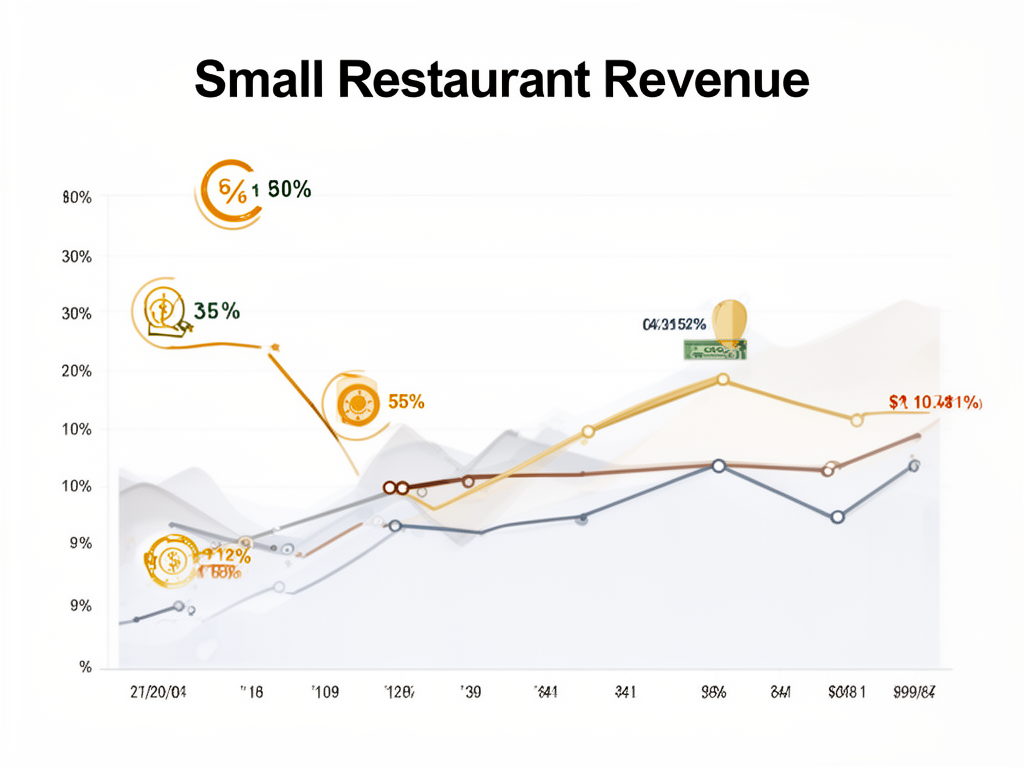
To provide some examples, a restaurant with weekly sales of £25,000 would have an average daily revenue of around £3,571. Additionally, small restaurants can generate revenue per square foot of £150 to £300 annually.
The revenue calculation for a small restaurant can be illustrated as follows: If a restaurant sells 100 cocktails at £12 each and 50 appetizers at £8 each, the daily revenue from those items alone would be £1,600.
Typical Profit Margins for Small Restaurants
The net profit margin for small restaurants can vary widely, ranging from 2-8% for stable independent establishments, 0-2% for struggling businesses, and 8-12%+ for exceptional performers. The industry average in the UK typically falls between 3-6%, with a national average of 10.66% in 2024.
Profit margins can also differ by restaurant type. Full-service restaurants tend to have a 3-6% net profit margin, fast casual establishments 6-9%, quick-service restaurants 6-10%, fine dining 1-5%, and ghost kitchens 5-12%.
In addition to net profit, small restaurants should also monitor their operating margins, which typically range from 6-15%. Maintaining a prime cost target (cost of goods sold plus labour) of 55-65% of sales is crucial for sustaining healthy profit margins.
Translating Margins to Daily Profit Earnings
To illustrate how profit margins translate to daily earnings, let’s consider a few examples:
- With an average daily revenue of £1,350 and a 3-6% net profit margin, the daily net profit would be between £40 and £81.
- At a daily revenue of £10,000 and a 10.66% net profit margin, the daily net profit would be £1,066.
It’s important to note that the prime cost can significantly impact a restaurant’s profitability. For example, if a restaurant has weekly sales of £25,000 and a prime cost of 66% (£16,500), there would be a £1,500 weekly gap if the target prime cost was 60%.
Furthermore, increases in labour costs, such as minimum wage hikes, can have a substantial effect on a small restaurant’s bottom line. An additional £50,000 to £70,000 in annual labour costs for a small restaurant with 15 minimum-wage employees can significantly erode profit margins.
Key Costs Impacting Daily Profits
Several key factors can impact the daily profitability of a small restaurant in the UK:
- Prime cost: 55-65% of sales
- Wages and Purchases: 67% of revenue
- Industry revenue: £1.3 trillion in 2025, but profits are being squeezed
- Wage hikes: Minimum wage increases in 22 states in 2026
Understanding and managing these critical cost drivers is essential for small restaurant owners to maintain healthy profit margins and ensure the long-term viability of their businesses.
Conclusion
The financial landscape for small restaurants in the UK is complex, with a range of factors influencing daily revenue and profit margins. By staying informed about industry trends, monitoring key metrics, and utilising tools like restaurant profit margin calculators, small restaurant owners can make more informed decisions to optimise their operations and profitability.
Sources:
Dinevate
BlueCart
Vanguard Food and Beverage Thynk Tank
Owner.com
MenuTiger






Leave a Comment