


Profit Margin on Alcohol in Restaurants: Maximizing Revenue
Introduction
As a restaurant or bar owner, maximising revenue from alcohol sales is crucial to your business’s profitability. The profit margin on alcohol can be a significant contributor to your overall bottom line, but it requires careful management and strategic pricing. In this article, we’ll explore the benchmarks, calculations, and strategies you can employ to optimise your alcohol profit margins and drive greater financial success.
Key Takeaways
- Bars typically achieve 10-15% net profit margins, with variations based on factors like location and drink focus.
- Maintaining a pour cost between 18-24% is ideal, as just 1 oz of excess pour can cost up to 20% of sales revenue.
- Pricing drinks based on the desired pour cost and featuring high-margin items like spirits can maximise your earnings.
- Analysing your product mix and promoting specialty cocktails can further boost your average ticket size and profitability.
- Implementing a “profit-first menu” can protect your margins amid industry challenges.
Benchmarking Profit Margins in Bars and Restaurants
In the hospitality industry, bars typically achieve net profit margins in the 10-15% range, although this can vary significantly by the type of establishment, location, and drink focus. For example, pubs with food tend to have lower margins due to higher food costs, while premium liquor and wine bars often see higher profitability from larger markups on their offerings.
One of the key metrics to consider is the gross profit margin on alcohol sales, which can reach 80% with a 20% pour cost. This highlights the importance of maximising alcohol revenue to your overall profitability, as cocktail sales alone can contribute up to 23% of a bar’s total revenue.
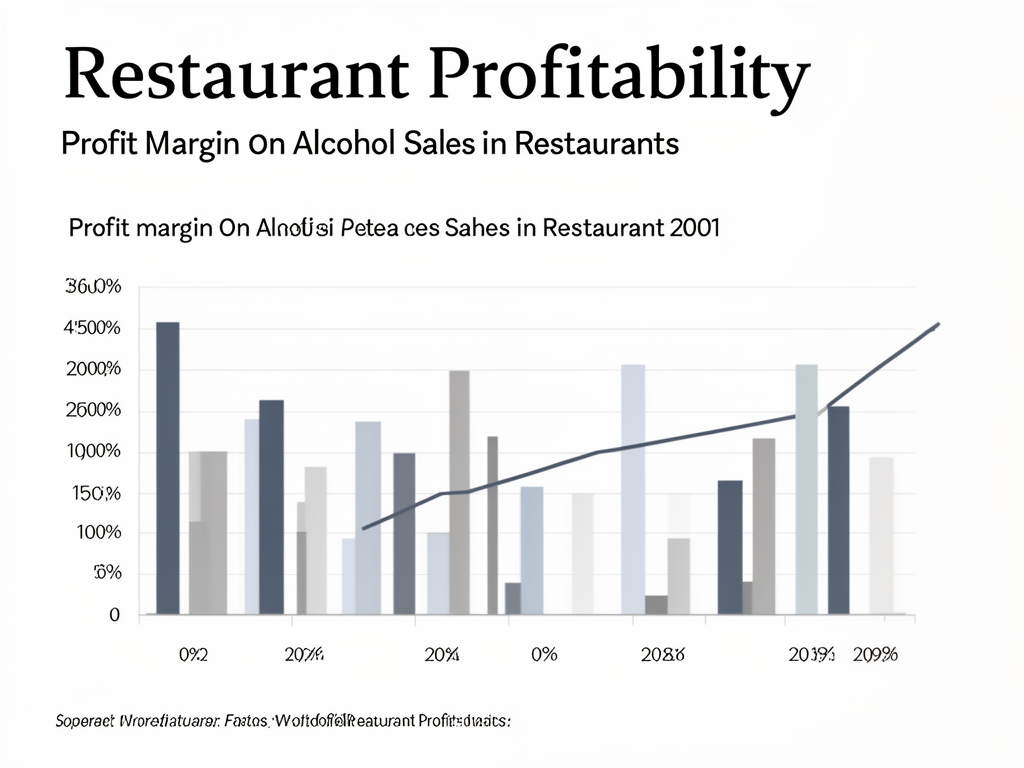
High-performing bars and restaurants focus on optimising their costs to exceed these industry averages, with a keen eye on areas like inventory management, portion control, and pricing strategies.
Calculating Pour Cost and Its Impact
The pour cost (the cost of the alcohol divided by the drink sales revenue) is a crucial metric for understanding your alcohol profit margins. Ideally, this figure should fall between 18-24%, as even a 1 oz excess pour can cost up to 20% of your sales revenue.
For 2026, industry experts suggest targeting a theoretical pour cost of 22%, with an additional 1-1.5% variance to account for factors like staff training and product waste. This would result in an overall pour cost target of 23.5%. Craft bars may see a slightly higher range of 20-26%, while dive bars may have a lower target of around 16%.
Remember, it’s important to chase gross profit dollars, not just percentages. For example, a £16 cocktail at a 24% pour cost would yield £12.16 in profit, while a £5 beer at a 15% pour cost would only generate £4.25 in profit.
Pricing Strategies for Maximum Revenue
When it comes to pricing your drinks, a simple formula to follow is to set the price at the desired pour cost. For instance, if your cost per drink is £2 and you want a 20% pour cost, the retail price should be £10.
You can also command higher prices for premium and craft cocktails, while bundling beer options can drive volume and boost overall sales. Implementing a “profit-first menu” can also help you protect your margins in the face of industry challenges like inflation and volatility.
Menu Optimization and Product Mix Analysis
To truly maximize your alcohol profit margins, it’s essential to analyse your top and low-performing products using your point-of-sale (POS) data. This will allow you to identify high-margin items like spirits (which can have margins of 25-45%) and wine (typically 15-20%) and promote them over lower-margin offerings like beer.
Additionally, featuring specialty cocktails (such as a spiced apple martini) can help boost your average ticket size and drive higher-margin sales.
Conclusion
By understanding the benchmarks, calculations, and strategic pricing approaches for alcohol sales, you can unlock the full profit potential of your restaurant or bar. From optimising your pour cost and promoting high-margin items to implementing a “profit-first” menu, there are numerous ways to maximise your alcohol revenue and drive greater financial success. With the right insights and tactics, you can position your business for long-term profitability in the ever-evolving hospitality industry.
Sources:
7Shifts
Backbar Academy
GBQ
SpotOn
NielsenIQ



Leave a Comment